
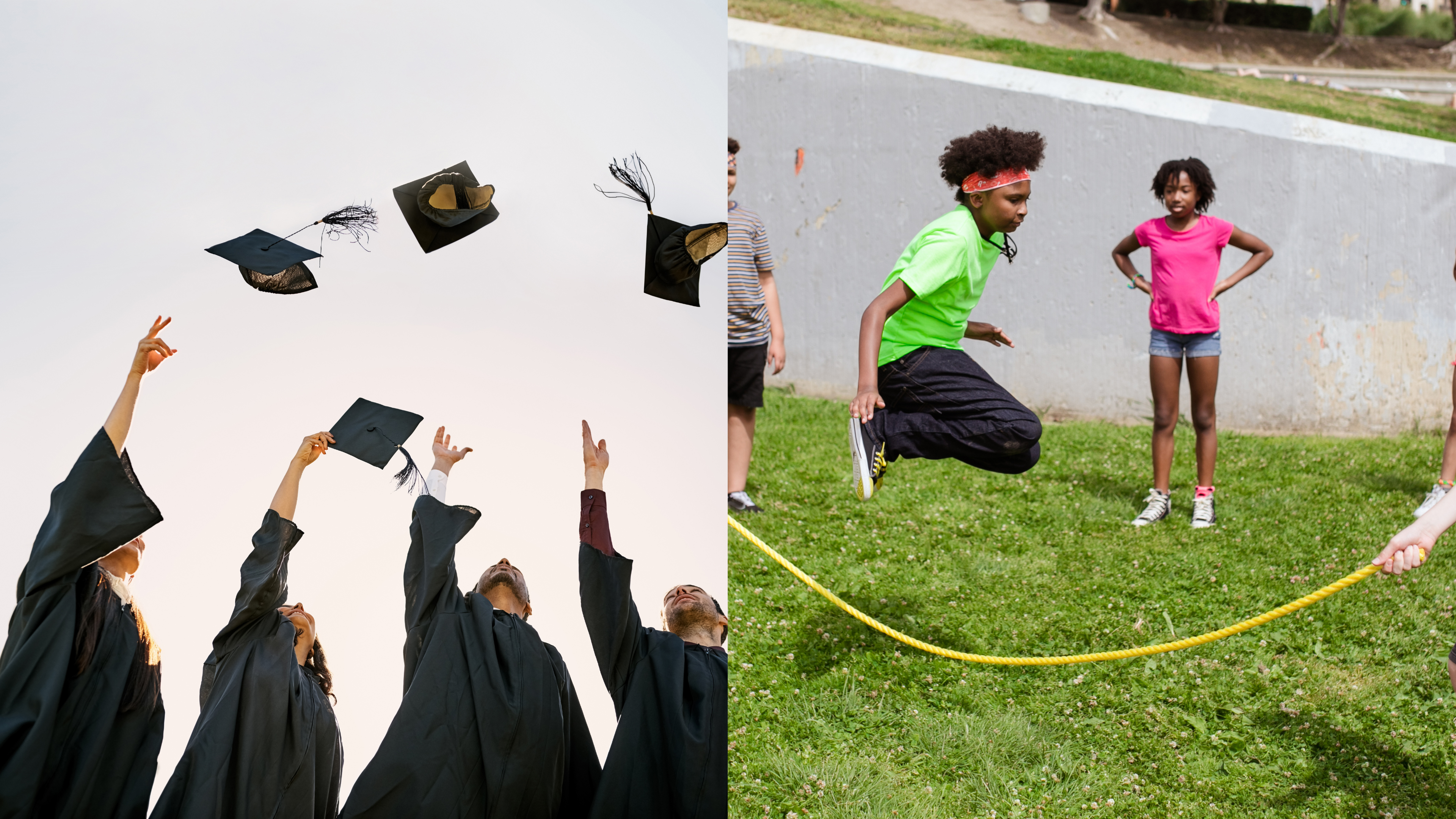
As parents and educators, we’re always looking for ways to help children succeed in school. While traditional approaches focus on study habits and tutoring, emerging research suggests that movement competence—how well a child performs physical skills like running, jumping, throwing, and balancing—might play an indirect but powerful role in academic success.
But does getting better at movement skills directly lead to higher grades? The answer isn’t straightforward. Let’s dive into what science says about this fascinating connection.
The Missing Direct Link: Movement Skills Don’t Automatically Boost Grades
At first glance, you might assume that better coordination or athletic ability would translate directly into better test scores. However, research shows no strong evidence that movement skill development alone improves academic performance (Donnelly et al., 2016).
For example, simply teaching a child to catch a ball more accurately won’t suddenly make them better at math. The brain regions controlling motor skills (like the cerebellum) are different from those involved in reading or problem-solving (prefrontal cortex).
So, if movement skills don’t directly boost academics, why should we care about them?
The Hidden Benefits: How Movement Builds Confidence and Self-Control
While movement skills may not directly affect grades, they contribute to psychological and cognitive traits that do support learning. Here’s how:
1. Boosts Self-Esteem & Confidence
When children master physical skills—whether it’s riding a bike, kicking a soccer ball, or performing a gymnastics routine—they develop a sense of competence. According to Harter’s Competence Motivation Theory (1981), this confidence can spill over into academics. A child who believes “I can learn this!” is more likely to persist through challenges.
2. Enhances Self-Management & Discipline
Structured movement activities (like martial arts, dance, or team sports) require focus, repetition, and self-control. These same skills are crucial for classroom success:
- Following instructions
- Completing homework on time
- Staying focused during tests
Studies on martial arts training, for example, show improvements in children’s impulse control and attention (Diamond & Lee, 2011).
3. Strengthens Executive Functions
Movement activities that involve planning, sequencing, and quick decision-making (like obstacle courses or team sports) engage executive functions—the brain’s command center for learning. Strong executive functions predict better reading, math, and problem-solving skills (Best et al., 2011).
4. Reduces Cognitive Load
When movement skills are automatic (e.g., good handwriting, sitting still without fidgeting), children can focus mental energy on learning instead of struggling with basic motor tasks (Cameron et al., 2012).
The Catch: Not All Movement Activities Are Equal
For movement skills to translate into academic benefits, they must be:
✅ Meaningful – The child sees value in the activity (e.g., team sports teach collaboration).
✅ Purposeful – The task has clear goals (e.g., improving balance for better focus).
✅ Developmentally Appropriate – Not too easy (boring) or too hard (frustrating).
A child forced into repetitive drills without engagement won’t gain the same benefits as one playing a sport they love.
Practical Takeaways for Parents & Educators
- Encourage Play-Based Movement – Free play, dance, and sports build skills naturally.
- Integrate Movement with Learning – Use action-based games (e.g., jumping while reciting math facts).
- Focus on Enjoyment – If kids enjoy the activity, they’ll stick with it and reap psychological benefits.
- Support Skill Mastery – Praise effort and progress, not just outcomes.
Final Verdict: Movement Skills Indirectly Help Academics
While becoming a better runner or jumper won’t magically turn a child into a straight-A student, movement competence builds the mindset and cognitive tools needed for academic success. Confidence, discipline, and focus—all nurtured through physical activity—are the real game-changers in the classroom.
So, instead of cutting recess for extra study time, maybe the key to better grades is more movement!
References
- Best, J. R., et al. (2011). Relations between executive function and academic achievement. Developmental Psychology.
- Diamond, A., & Lee, K. (2011). Interventions shown to aid executive function development. Science.
- Donnelly, J. E., et al. (2016). Physical activity and academic achievement. Medicine & Science in Sports & Exercise.