
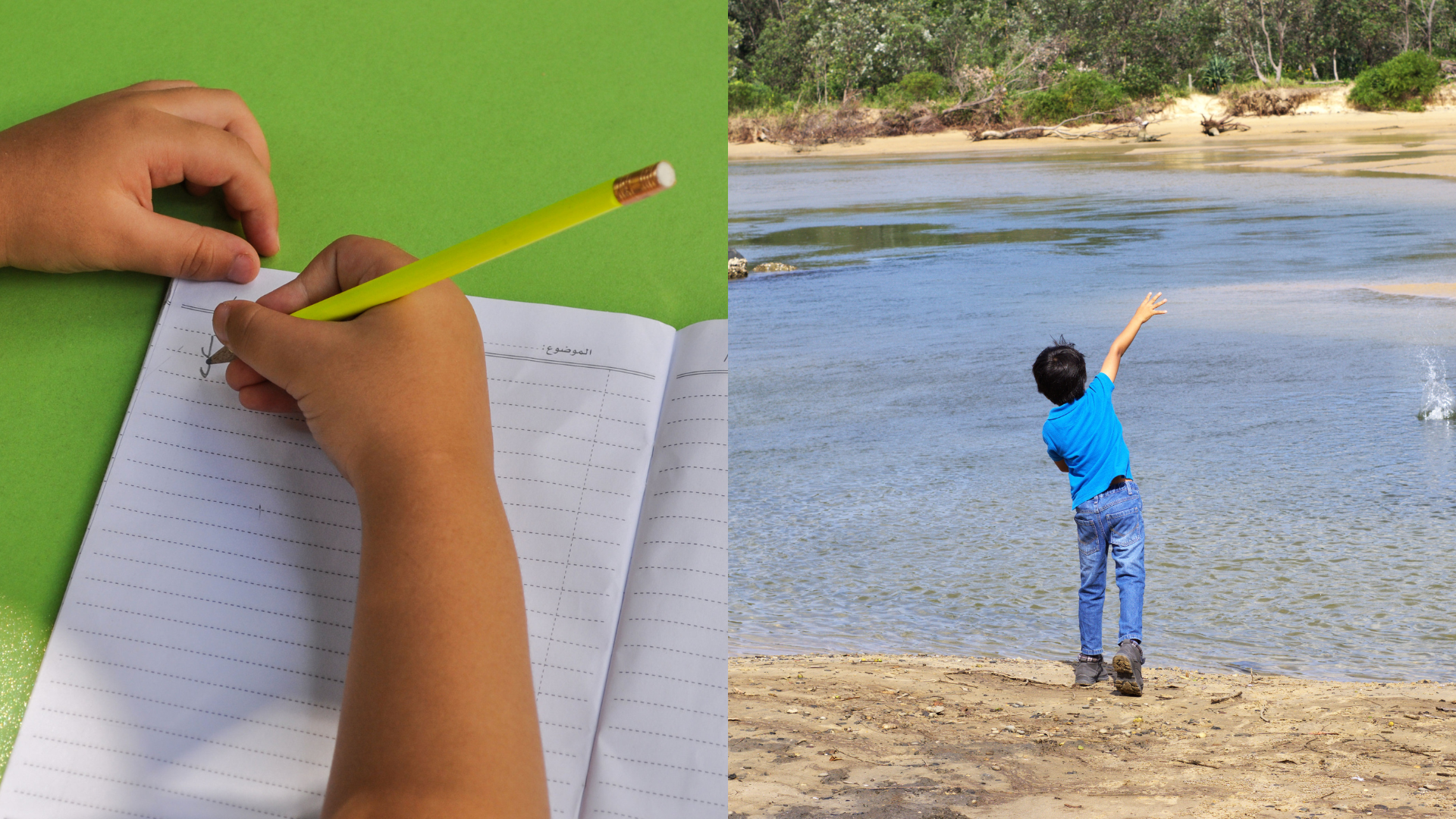
Understanding Motor Lateralization in Childhood
A common assumption in child development is that lateral dominance—such as being right-handed—should be consistent across all motor skills. This would mean that a child who writes with their right hand should also throw, bat, and kick with their right side. However, current research in motor development and neurophysiology suggests that motor lateralization is a complex and individualized process, and such uniformity is neither necessary nor expected.
What Is Lateral Dominance?
Lateral dominance refers to the consistent preference for one side of the body over the other, typically manifesting in tasks like writing, throwing, or kicking. This preference is governed by hemispheric specialization in the brain, where one hemisphere (usually the left, for right-handed individuals) becomes more dominant for fine motor control of the opposite side of the body.
While unilateral skills (e.g., handwriting, throwing) benefit from the development of a dominant side due to the need for precision, bilateral coordination and multi-limb tasks (e.g., running, hopping, or ball sports) involve a more distributed use of both hemispheres and both sides of the body.
Mixed Dominance and Motor Skill Development
Mixed laterality or cross-dominance refers to a natural variation where a child might use different sides of the body for different skills—for example:
- Writing with the right hand but throwing with the left.
- Kicking predominantly with one foot while favoring the opposite hand for throwing or catching.
This phenomenon is not only common but developmentally typical. Studies in pediatric motor control (e.g., Gabbard, 2018; Haywood & Getchell, 2020) show that mixed dominance is frequently observed in children under the age of 10 and often stabilizes with age. Importantly, mixed laterality is not indicative of motor deficits or cognitive impairments.
The Case for Bilateral Skill Development
Research supports the value of developing bilateral motor proficiency, especially during the critical early years of motor learning (ages 3–8). For many gross motor skills—such as hopping, skipping, jumping, and kicking—bilateral skill training improves overall coordination, movement efficiency, balance, and sport adaptability.
From a physical literacy perspective, exposing children to activities that promote symmetrical and asymmetrical movement patterns fosters greater movement competence, confidence, and long-term engagement in physical activity.
When Does a Preferred Side Matter?
In tasks requiring high precision and fine motor control—such as handwriting or throwing—a consistent dominant side tends to emerge and should be supported. However, this preference develops naturally and should not be forced. Prematurely trying to “correct” a child’s natural tendencies can create confusion and even hinder motor learning.
Occupational therapists and pediatric motor experts emphasize the importance of observing natural preferences and gradually refining dominant side usage in skill-specific contexts without imposing unnecessary restrictions.
Conclusion: One Size Doesn’t Fit All
To summarize, children who write with their right hand do not necessarily need to throw or bat with their right side. Motor lateralization is highly individualized, and mixed dominance is a normal and non-pathological part of motor development.
Parents, coaches, and educators should focus on:
- Encouraging exploration of both sides of the body.
- Supporting the development of a dominant side in precision-based skills.
- Promoting bilateral motor competence for overall athletic development and physical literacy.
Ultimately, the goal is not uniformity but functional proficiency and confidence in movement, regardless of which side of the body a child prefers to use.
References:
- Gabbard, C. P. (2018). Lifelong Motor Development (7th ed.). Pearson.
- Haywood, K. M., & Getchell, N. (2020). Life Span Motor Development (7th ed.). Human Kinetics.
- Henderson, S. E., & Sugden, D. A. (1992). Movement Assessment Battery for Children (MABC).
- International Physical Literacy Association (IPLA). (2017). Definition of Physical Literacy.